Corrected Anion Gap Calculator in Lab Interpretation
What Is the Anion Gap?
The anion gap is a basic but valuable value derived from routine electrolytes on a serum chemistry panel. It assists clinicians in identifying hidden acids or other unmeasured anions that may be affecting a patient’s chemistry. In practical terms, the anion gap value supports clinical interpretation of blood chemistry by showing whether there may be an underlying electrolyte imbalance or metabolic acid-base disorder.
The classic anion gap formula compares positively charged ions with negatively charged ions, most commonly using serum sodium, serum chloride, and serum bicarbonate. In many lab systems, potassium may also be included, although the most common version excludes it. The result is not a direct measurement of acid, but a diagnostic aid that can indicate conditions that require more detailed acid-base evaluation.
Because the anion gap is calculated from standard laboratory results, it is widely used in bedside and outpatient patient assessment. A thoughtful reading of the number can suggest whether there is a high anion gap pattern, a normal anion gap state, or an unexpectedly low anion gap that deserves confirmation.
Why Adjusted Anion Gap Counts
This typical anion gap is valuable, but it can be inaccurate when albumin is reduced. Because serum albumin holds a large amount of negative electrical charge in the blood, hypoalbuminemia can decrease the measured gap even when relevant acids are present. That is why the corrected anion gap matters: it calibrates the number so the clinician can better assess acid-base balance.
If you skip albumin adjustment, a patient with significant metabolic acidosis may seem to have a normal result. That is especially important in hospitalized or critically ill patients, where albumin may decline because of inflammation, poor nutrition, fluid shifts, or illness severity. In these cases, the corrected value enhances diagnostic interpretation and enables more accurate decisions.
The corrected result is not meant to substitute for clinical judgment. Instead, it provides context to the raw calculation and improves clinical significance. For example, anion gap in chronic kidney disease a “normal” anion gap in a patient with low albumin may still hide a true acid load. This is why correction is often a better reflection of real physiology than the unadjusted number alone.
How the Anion Gap Calculator Operates
The Anion Gap Calculator simplifies the anion gap calculation so healthcare providers and trainees can quickly estimate the gap from everyday blood chemistry. Most calculators use a straightforward calculation formula based on serum sodium, serum chloride, and serum bicarbonate. In its usual form, the calculation is:
anion gap = sodium - (chloride + bicarbonate)Some versions also include potassium, which modestly changes the result. A potassium-inclusive formula may be written as:
anion gap = sodium + potassium - (chloride + bicarbonate)Both versions are applied in practice, but the sodium-based formula is the most familiar. The calculator does not identify disease by itself; it is a diagnostic aid that helps read the broader pattern of blood chemistry. When paired with the patient’s clinical signs, pH, lactate, ketones, kidney function, and medication history, it becomes part of a complete clinical interpretation.
Because the anion gap shows the difference between measured cations and measured anions, it indirectly suggests the presence of unmeasured anions. That is why it is so valuable in detecting metabolic problems that might otherwise be missed on a standard serum chemistry panel.
Adjusting the Anion Gap for Albumin
The revised anion gap accounts for the influence of blood albumin. As albumin is a key negatively charged protein, reduced levels can make the gap appear falsely low or typical. The albumin correction raises the number upward when albumin is below the usual reference range.
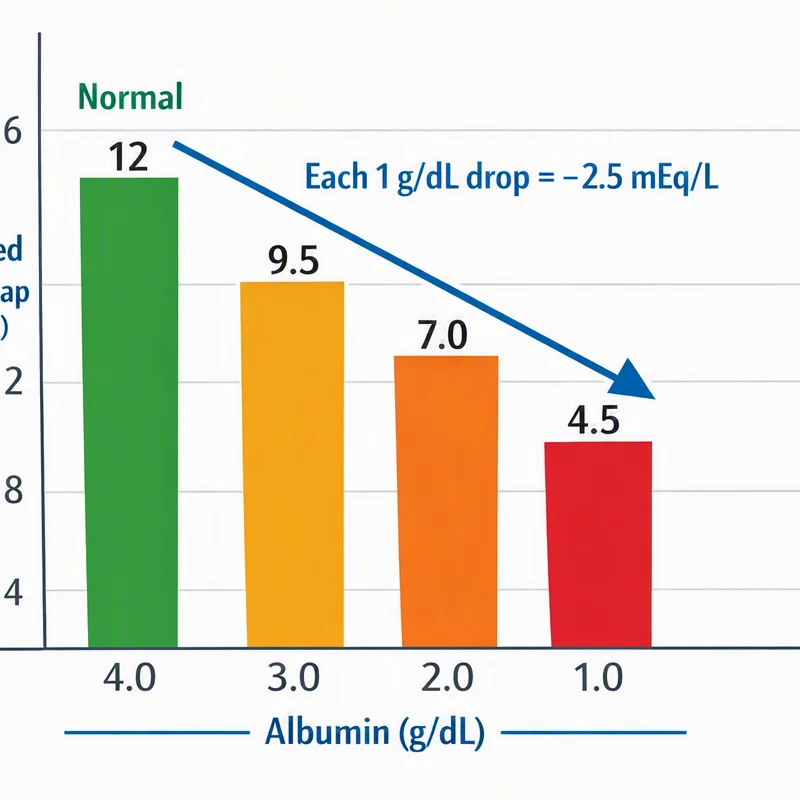
A standard correction approach uses a fixed amount for each gram per deciliter that albumin is below the usual level. Various institutions may use slightly different formulas, so the exact adjustment may vary. In general, the lower the albumin, the greater the need for recalculation. This is the practical heart of anion gap correction.
Why does this matter so much? Because low albumin can mask a true acid imbalance. A patient may have a standard anion gap that looks normal, yet the corrected value reveals a clinically important elevation. That difference can change the workup, the urgency of treatment, and the interpretation of the overall acid-base status.
Interpreting the corrected result is particularly important when comparing values against a lab’s reference range. A “normal” uncorrected number may no longer be anion gap calculator mEq/L normal after adjusting for albumin. For this reason, the corrected calculation is often a better reflection of the patient’s true clinical meaning than the raw value alone.
Frequent Causes of an Elevated Anion Gap
An elevated gap usually indicates presence of acidic substances or unmeasured anions. The main contributors include lactate acidosis, ketotic acidosis, renal failure, and certain poisonous ingestions. These conditions can both disturb acid base balance and create a clear elevated anion gap pattern.
Lactate acidosis can develop when tissues are poorly perfused or metabolically stressed, leading to higher lactate production. Ketoacidosis occurs when ketone bodies rise, often in diabetes, alcohol-related illness, or prolonged fasting. Renal failure can increase the gap because the kidneys are unable to remove acids effectively.
Poisonous alcohols are another major cause of increased values. Ingestions involving methanol, ethylene glycol, and related compounds can produce major acid-base derangements that may be life-threatening. Salicylate drugs can also alter the pattern, sometimes creating a mixed disorder that requires careful review of the full clinical picture.
Because these disorders can overlap, the anion gap should be viewed as a single part of the puzzle. It supports clinical assessment, but it does not replace history, exam, medication review, and targeted testing. The calculator is most useful when it guides the next action in the diagnostic process.
Interpreting Normal or Low Anion Gap Results
A low anion gap is less common than an increased result, but it can still matter. Before concluding there is a problem, the first question is whether the result is genuine. Laboratory error is one of the most frequent explanations, so rerunning the test is often the first step if the result is surprising.
A regular anion gap does not always mean there is absence of acid-base disorder. If the patient has hypoalbuminemia, the true gap may be underestimated until an albumin correction is applied. That is why the modified number can be more informative than the initial number when assessing metabolic acidosis.
Another important cause of a low or unexpectedly normal result is paraproteinemia. Abnormal proteins can change the blood chemistry pattern and change the apparent balance of measured ions. In such cases, the anion gap is not a diagnosis by itself, but a hint that may prompt more workup.
When evaluating low or normal results, look at the entire clinical interpretation: albumin level, other electrolytes, pH, bicarbonate, kidney function, and the patient’s symptoms. This broader approach strengthens diagnostic interpretation and helps avoid false reassurance.
Detailed Sample Calculation
This is a basic worked example based on common laboratory values. Suppose the patient has the following:
- sodium level: 140
- serum chloride: 102
- blood bicarbonate: 18
- potassium level: 4.0
With the common sodium-based formula, the calculation is:
anion gap = 140 - (102 + 18)This results in an anion gap of 20. When the lab’s reference range is lower than that, this may indicate a increased anion gap. When the patient also has low blood albumin, the next step is albumin correction to determine the albumin-corrected anion gap.
Next assume the albumin is reduced. After applying the appropriate anion gap adjustment, the corrected value may be even higher, revealing a more significant metabolic problem than the unadjusted number suggested. For this reason the Anion Gap Calculator is a highly practical clinical tool: it makes easier the math while retaining the clinical meaning.
That illustrative example also shows how the result connects to the rest of the evaluation. A high gap with low bicarbonate can support concern for metabolic acidosis, while the underlying cause may be elevated lactate, ketone buildup, kidney failure, toxic alcohol ingestion, or salicylate toxicity. The calculator does not identify the cause, but it assists in narrowing the differential.
FAQs About Adjusted Anion Gap Results
What is a corrected anion gap and why is it used?
The corrected anion gap is the usual anion gap adjusted for low serum albumin. It is used because hypoalbuminemia can make the uncorrected value look artificially low. The correction enhances clinical interpretation and more accurately shows the patient’s true acid-base balance.
How is calculated the anion gap with albumin correction?
Start with the usual anion gap formula using serum sodium, serum chloride, and serum bicarbonate. Then apply an albumin correction based on the measured serum albumin. The exact method may change by institution, so the calculator should follow the same reference range and formula used by the lab or clinical setting.
What may suggest a high anion gap?
A high anion gap commonly suggests extra acids in the blood, such as in lactic acidosis, ketoacidosis, renal failure, or exposure to toxic alcohols or salicylates. It is a key clue in the evaluation of metabolic acidosis, but it should be interpreted with the rest of the laboratory results and the patient’s symptoms.
Can a normal anion gap still mean a serious problem?
Yes. A normal anion gap does not always rule out clinically important illness. Hypoalbuminemia can hide a true gap, and a lab error can also distort the result. In addition, a patient may have another type of metabolic problem that requires broader acid-base evaluation and clinical review.
When should an anion gap result be reviewed by a clinician?
Any unexpected result should be reviewed when it does not fit the patient’s condition, especially if there is metabolic acidosis, altered mental status, kidney dysfunction, suspected poisoning, or significant electrolyte imbalance. The result is best used as a diagnostic aid within overall patient assessment, not as a standalone answer.