Exploring Albumin-Corrected Anion Gap?
The anion gap value is a basic yet essential blood chemistry measure used in clinical interpretation of acid-base disturbances. An Anion Gap Calculator helps estimate whether there may be an underlying acid-base disorder such as metabolic acidemia. But the basic result can be inaccurate when albumin is low. That is where the corrected anion gap for albumin becomes helpful.
Albumin is one of the main plasma proteins and a major part of the body’s circulating proteins. Because it carries a negative charge, it affects the distribution between measured ions in the blood. If albumin is reduced, the calculated result may look falsely normal even when significant acid accumulation is present. Correcting for albumin helps the clinician adjust for this shift and improves the accuracy of the assessment.
This article explains what the anion gap is, why albumin matters, how the correction formula works, and how to use an Anion Gap Calculator as a diagnostic tool during a lab evaluation. It also covers common pitfalls that can distort the reading and lead to a missed diagnosis.
What’s the anion gap?
The anion gap is a derived value based on routine electrolytes in the blood. It measures the gap between the main measured positively charged ions and negatively charged ions. In practice, it is commonly derived from sodium, chloride, and bicarbonate.
The standard anion gap formula is:
Anion gap = sodium − (chloride + bicarbonate)
This calculation is helpful because not all ions in the blood are directly measured. The gap indicates the presence of unmeasured ions and unmeasured anions. In other words, it is a warning sign that something in the body’s acid-base balance may be off.
A normal result suggests that measured cations and anions are relatively balanced. A higher-than-expected result can point toward a buildup of acids, toxins, or other metabolic products. The anion gap is therefore a valuable part of routine blood chemistry review, especially when looking for an electrolyte imbalance.
The exact reference range can vary depending on the laboratory and the units used. That is why any medical calculation should always be interpreted in context rather than in isolation. The Anion Gap Calculator provides a simple calculated result, but the number only becomes meaningful when paired with the patient’s overall clinical picture.
Why albumin influences the anion gap
Albumin is a negatively ionized protein and one of the chief plasma proteins in the bloodstream. Because it contributes a substantial number of negative charges, albumin is central to acid-base balance.
When albumin is low, there are reduced negatively charged particles in the blood. The body continues to maintain electrical neutrality, so other ions and buffers adjust in response. The practical result is that the standard anion gap can seem lower than expected. This is why hypoalbuminemia can mask an underlying disorder.
This relationship matters because albumin is not just a transport protein. It is part of the broader buffering system that maintains normal physiology. Changes in serum proteins can affect the apparent gap even if the underlying pathology is substantial. In that sense, albumin helps shape the pathophysiology of how the anion gap responds in illness.
For example, a patient with low albumin may have a normal-appearing anion gap despite having a true metabolic acidosis. Without correction, a clinician might miss the severity of the problem. The corrected value offers a more accurate clinical interpretation because it adjusts the result to reflect the albumin level.
That is the purpose of the albumin-corrected anion gap: to compensate for the effect of reduced albumin so the result better represents actual acid load and circulating unmeasured ions.
How to work out albumin-corrected anion gap
To determine the corrected value, you first determine the standard anion gap using the anion gap formula. Then you use an albumin correction formula based on the patient’s albumin level.
A commonly used adjustment is:
Corrected anion gap = measured anion gap + 2.5 × (4.0 − albumin in g/dL)
In practical terms, for every 1 g/dL drop in albumin below 4.0 g/dL, the anion gap is increased by about 2.5 mEq/L. Some institutions use slightly different correction factor values, so local practice and the calculator’s method should always be checked.
Here is the practical sequence:
- Record the patient’s sodium, chloride, and bicarbonate from lab values.
- Use the anion gap formula to get the initial result.
- Assess the albumin level.
- Use the albumin correction formula to calculate the corrected value.
- Evaluate the result in the context of the patient’s symptoms and other lab findings.
For instance, if the measured anion gap looks normal but the albumin is low, the corrected value may reveal a hidden high anion gap metabolic acidosis. That can be the difference between a missed diagnosis and a timely one.
An Anion Gap Calculator can simplify this process by combining the measured ions and the albumin adjustment into one calculated result. This minimizes manual error and supports faster laboratory assessment.
When should the corrected anion gap be used?
The corrected value is especially helpful when albumin is reduced, especially in settings where acid-base findings can change quickly. Low albumin is common in hospitalized patients and can make the uncorrected value less reliable.
It is particularly helpful during evaluation of metabolic acidosis, because the cause of acidosis may be hidden by a apparently normal gap. In critical illness, albumin often falls due to inflammation, poor nutrition, fluid shifts, or liver dysfunction. In these settings, using the corrected value improves clinical assessment.
It is also useful in chronic kidney disease, where acid retention, retained acids, and altered protein levels can complicate the picture. Patients may have a mixed disorder, and the corrected value can reveal a more accurate metabolic status.
Overall, consider correction when:
- Albumin is below normal.
- There is unexplained metabolic acidosis.
- The patient is in critical illness.
- Chronic kidney disease may be contributing to acid retention.
- The reported gap does not match the clinical picture.
The goal is not to replace standard testing, but to improve screening and interpretation. The corrected number can help uncover clinically important metabolic derangement that might otherwise be overlooked.
How to understand a corrected anion gap that is high or normal
A raised anion gap metabolic acidosis suggests that there are extra acids or other unmeasured negative ions in the blood. Common causes include lactic acidosis, ketoacidosis, renal failure, and toxin exposure. After albumin correction, a result that seems normal on first glance may become clearly elevated.
If the corrected value is high, it confirms the presence of additional acid burden and helps narrow the differential diagnosis. A clinician may then look for tissue hypoperfusion, sepsis, diabetic emergencies, renal impairment, or ingestion of toxic substances.
A normal anion gap after correction suggests that the acid-base problem may not be due to a large accumulation of unmeasured acids. In that case, other causes such as gastrointestinal bicarbonate loss or renal tubular issues may be more likely. The key is to interpret the corrected value alongside the serum bicarbonate, pH, and overall clinical status.
Some patterns to keep in mind:
- High corrected anion gap plus low bicarbonate: typically points to a high-gap metabolic process.
- Normal anion gap after correction: may indicate a non-gap acid-base disorder.
- Mixed findings: can occur when more than one process is present.
This is why the albumin-adjusted number is more than simply a mathematical exercise. It improves the diagnostic tool value of the anion gap and aids better bedside judgment.
Frequent sources of a misinforming anion gap
Several factors can make the anion gap unreliable. The most important is low albumin, which can mask a true elevation. If albumin is not factored in, the patient may look to have a standard result when the actual metabolic problem is significant.
Laboratory error is another possible cause. Any discrepancy in sodium, chloride, or bicarbonate measurement can alter the calculated result. Because the gap is derived from these values, even small inaccuracies can shift the interpretation.
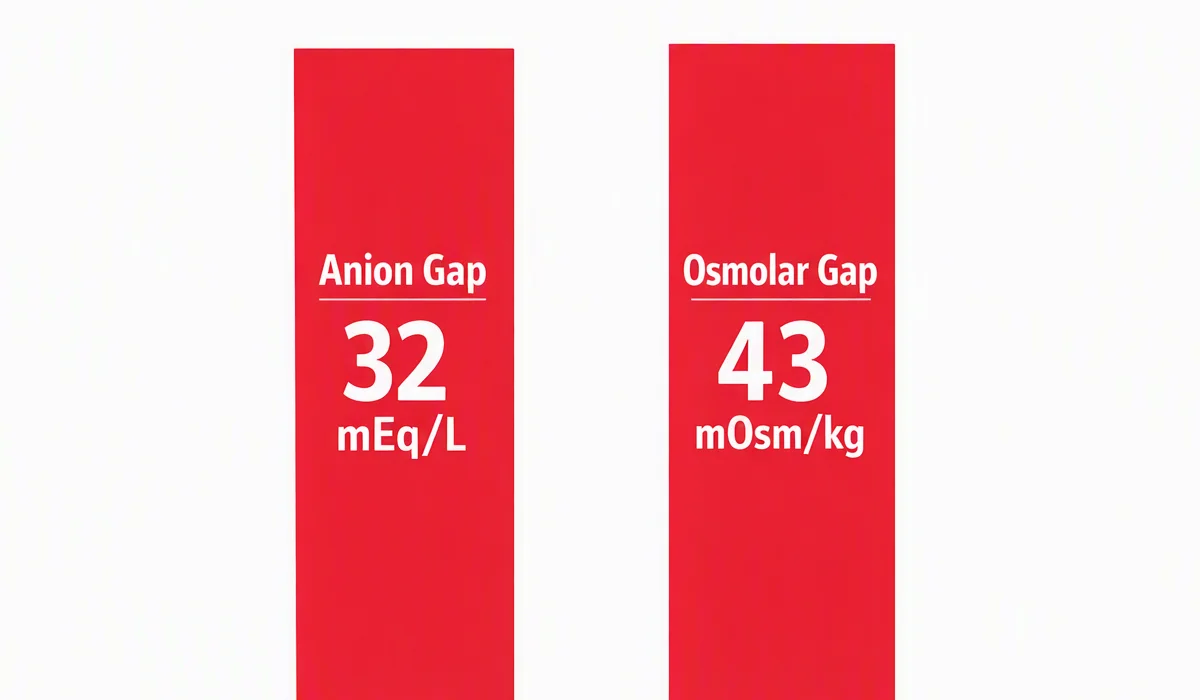
One more source of confusion is the presence of unmeasured anions. These may include lactate, ketones, sulfate, phosphate, and other acids that elevate the gap. The presence of such substances can cause a true elevation even if the initial picture is unclear.
Toxic alcohols are a critical example because they can lead to severe metabolic derangement with an elevated gap. Their metabolites add to the burden of unmeasured ions and can cause potentially fatal acid-base abnormalities.
Further reasons the gap may mislead include:
- Shifts in plasma proteins beyond albumin.
- Combined acid-base disorders that mask the pattern.
- Delays between specimen collection and testing.
- Inaccurate use of the correction formula or reference units.
Because these pitfalls, the anion gap should be treated as a quick check rather than a independent diagnosis. A careful review of the entire blood chemistry panel and the patient’s condition is necessary.
Anion gap calculator: which inputs are required?
An Anion Gap Calculator typically needs a few key inputs to produce a reliable result. The minimum values are sodium, chloride, and bicarbonate. Many calculators also ask for the albumin level so they can automatically make the https://anion-gap-calculator265.wordcanopy.com/posts/anion-gap-calculator-with-corrected-chloride-method correction.
Typical inputs include:
- Sodium from the blood chemistry test.
- Chloride from the blood chemistry test.
- Bicarbonate or serum bicarbonate from the lab panel.
- Albumin level when correction for albumin is needed.
Some calculators may also include a selectable reference range or method preference because different laboratories and institutions use slightly different standards. That matters for interpretation and for deciding whether a result is elevated, normal, or borderline.
Using this tool helps standardize the medical calculation and reduces the chance of arithmetic mistakes. It also improves speed, which is useful in urgent situations where an acid-base disorder needs prompt attention. Still, the calculator should not replace medical judgment. It is best viewed as a support tool for screening and interpretation.
In short, the calculator turns routine laboratory data into a useful physiologic clue. When paired with albumin, it becomes a more refined method of assessing acid-base status and the possibility of hidden metabolic problems.
Frequently asked questions about albumin-corrected anion gap
What is albumin-corrected anion gap?
The albumin-corrected anion gap is the anion gap modified for the effect of low albumin. Because albumin is a major negatively charged plasma protein, low levels can make the uncorrected result appear falsely normal. The correction gives a more accurate picture of acid-base balance and possible metabolic acidosis.
Why do you modify the anion gap for albumin?
You modify the anion gap for albumin because albumin strongly influences the level of unmeasured negative charge in the blood. When albumin is low, the measured gap may understate the presence of unmeasured ions and conceal a true high-gap process. Correction enhances clinical interpretation.
How do you work out an albumin-corrected anion gap?
First calculate the standard anion gap using sodium, chloride, and bicarbonate. Then perform a correction formula based on the albumin level. A common method is adding 2.5 mEq/L for every 1 g/dL albumin below 4.0 g/dL. The exact correction factor may vary by institution.
When is an anion gap calculator valuable?
Anion Gap Calculator is helpful when you need a rapid and accurate medical calculation during laboratory assessment. It is especially useful if albumin is low, if metabolic acidosis is suspected, or if a patient has chronic kidney disease or critical illness. It assists screening and interpretation without manual arithmetic errors.
What does a high corrected anion gap mean?
A high corrected anion gap usually suggests there are excess unmeasured anions in the blood, which indicates a diagnosis of high anion gap metabolic acidosis. Common causes include lactic acidosis and ketoacidosis, as well as renal failure or toxic exposures. The result should always be interpreted with the full clinical picture and other lab values.