What Is the Meaning of a Low Anion Gap?
What Does the Anion Gap Mean?
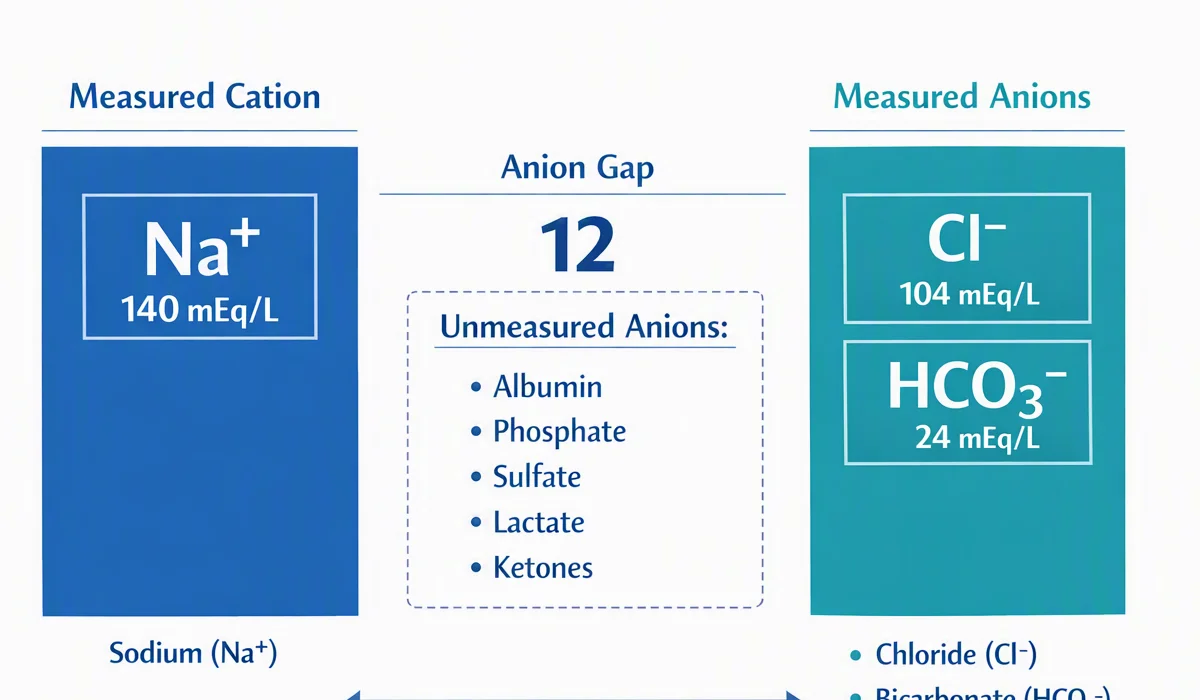
The anion gap is a laboratory calculation that is used to interpret blood chemistry and overall acid-base balance. It is not a directly measured value. Instead, it estimates the difference between the main positively charged and negatively charged particles in your blood, especially sodium, chloride, and bicarbonate. Because it shows the relationship between key electrolytes, it can act as a helpful diagnostic clue when a lab result looks unusual.
Doctors often consider the anion gap as part of a larger electrolyte panel or broader review of blood chemistry. It helps identify whether there may be an acid-base disorder or another metabolic issue that needs attention. The value can also suggest whether there are extra unmeasured anions or whether something in the calculation is shifting the result downward.
Because the anion gap is a calculated value, it should always be interpreted with the rest of the lab report and the person’s patient symptoms. A single number alone does not tell the whole story. That is why lab interpretation matters as much as the number itself.
How an Anion Gap Calculator Works
An anion gap calculator takes lab measurements from a blood test to calculate the gap. In many cases, the calculator takes the measured sodium, chloride, and bicarbonate values and follows a standard formula. This is a quick way to understand whether the result lands outside the expected pattern.
The calculator is a helpful screening test for understanding a result, but it does not replace a full medical evaluation. It can point out an abnormal result, yet the meaning depends on the rest of the lab values, including albumin and other supporting labs. Put simply, the calculator helps with the first step of results review, not the final diagnosis.
For instance, if sodium is normal but chloride is relatively high or bicarbonate is lower than expected, the anion gap may look different. A calculator helps you see that pattern more clearly. Still, the number is only one part of the bigger picture, which is why clinicians look at the full set of findings before deciding whether there is a true metabolic disturbance.
What Counts as a Low Anion Gap?
A reference range is the expected range for a lab value, and the exact range can differ by laboratory and testing method. A normal anion gap is often generally in the standard range used by that lab, while a low anion gap is a measurement below that expected level. Because ranges are different, a result that seems low in one report may be normal in another.
One of the most important factors in interpreting a low anion gap is albumin. Albumin is a major serum protein and a major contributor to the body’s electrical balance. If albumin is low, the anion gap can drop as well. That means a low number does not always point to a dangerous condition; sometimes it simply reflects low protein levels.
Because the exact threshold depends on the lab, it is better to think in terms of context rather than a single universal cutoff. The key question is whether the low value is slight, isolated, and explainable, or whether it is persistent and paired with other concerning findings.
Typical Causes of a Low Anion Gap
One common cause is hypoalbuminemia, which describes low albumin in the blood. Since albumin is an important negatively charged protein, a drop in albumin can decrease the anion gap. This helps explain why doctors often review albumin whenever they see a low result.
A different possibility is lab error. Since the anion gap is calculated from several measurements, any mistake in one of those measurements can produce a misleading result. A false reading may happen because of sample handling issues, instrument variation, or other technical factors. This is why repeat testing is often the first step when delta ratio app a low anion gap appears unexpectedly.
In rarer cases, a low anion gap can be linked to abnormal blood proteins such as in multiple myeloma or paraproteinemia. In these conditions, extra proteins in the blood can affect how charges are distributed, which may lower the calculated result. In some cases, the low anion gap becomes a clue that prompts more targeted testing.
Additional causes can include shifts in measured ions, changes in serum proteins, or certain medications and exposures. The important point is that the low number is a signal to look deeper, not a diagnosis by itself.
When a Low Anion Gap Is Not a Concern
Not every low anion gap means there is a serious issue. Occasionally it is simply a one-time false low result resulting from a technical issue or minor variation between measurements. If the number does not match the overall picture, doctors often recommend repeat testing before making any judgments.
In many cases, the answer depends on clinical context. For example, if someone feels well and the rest of the labs are normal, the low result may have minimal meaning. If the person has other abnormal findings, symptoms, or a known condition that affects proteins or electrolytes, the result may deserve greater consideration.
An isolated low value should also be compared with the rest of the electrolyte imbalance picture. If sodium, chloride, bicarbonate, and albumin are otherwise reasonable, the result may not point to a significant underlying condition. This is why a low anion gap is best treated as a prompt for measured assessment rather than alarm.
Signs and Conditions Linked to a Low Anion Gap
A low anion gap itself does not usually cause symptoms. Rather, symptoms come from the underlying cause. That means, the person may feel well, or they may have evidence of another health problem that led to the abnormal result. The lab finding is often a signal rather than the primary issue.
Conditions such as kidney disease and liver disease can be associated with alterations in proteins, fluid balance, and acid-base balance. These conditions may affect albumin or other serum proteins, which can change the anion gap. In some cases, a low value appears alongside other abnormal tests that point in the direction of these disorders.
Dehydration can also alter lab patterns, although it usually affects several values together rather than resulting in a low anion gap on its own. A more complex acid-base disorder may be present if the blood chemistry shows shifts in bicarbonate, chloride, or other electrolytes. That is why the full pattern matters more than a single number.
If the low anion gap is related to protein abnormalities such as paraproteinemia, there may be additional signs like tiredness, bone pain, recurrent infections, or other changes. Those symptoms are not caused by the number itself but by the condition behind it.
How Doctors Assess a Low Anion Gap
Doctors typically initiate with a complete metabolic panel because it offers the key lab values needed to calculate and interpret the anion gap. This panel commonly includes sodium, chloride, bicarbonate, and further important markers. The purpose is to see whether the result fits with the rest of the chemistry panel.
Serum albumin is one of the most important follow-up labs. If albumin is low, that on its own may explain the result or at least help adjust interpretation. Doctors may also look at magnesium because unexpected magnesium levels can affect electrolyte balance and sometimes appear with other metabolic changes.
Total protein is another key supporting lab, especially when there is concern about paraproteinemia or other serum proteins that could change the result. A increased or atypical total protein may point to a need for additional testing. In some cases, protein studies help determine whether the low anion gap is related to excess protein in the blood.
The overall medical evaluation may include a thorough review of medications, hydration status, kidney function, liver tests, and symptoms. If something does not fit, doctors may order follow-up testing to determine whether the result is real and what is causing it.
When to Touch Base With a Clinician
You should check back if the lab result is consistently low, especially if it does not fit previous results or the rest of your testing. A single low number is often less concerning than a pattern that remains over time. Persistent abnormality deserves a closer look because it may point to an ongoing issue.
It is also advisable to discuss the result if you have a relevant medical history, such as kidney disease, liver disease, unexplained fatigue, anemia, or known protein abnormalities. Your history helps determine whether the low value is likely to be incidental or whether it may be a meaningful clue.
Ask about diagnostic testing if your clinician thinks the result may indicate an underlying disorder. Depending on the situation, this might include repeating the chemistry panel, checking albumin and total protein, or ordering more specific studies. The goal is not to chase a number, but to understand the cause.
If you have new or worsening patient symptoms, or if the low anion gap appears with other abnormal labs, do not ignore it. Quick follow-up can help separate a harmless lab variation from a true medical problem.
Frequently Asked Questions About Low Anion Gap
What does a low anion gap mean on a blood test?
A low anion gap means the calculated difference between measured cations and anions in your blood is below the expected normal range. It can happen because of low albumin, a lab error, or less commonly an underlying condition such as paraproteinemia or multiple myeloma. The meaning depends on the full lab pattern and your symptoms, so it should be reviewed in medical evaluation rather than judged on its own.
Can a low anion gap be caused by lab error?
Yes. Lab error is one of the common reasons for a low anion gap, especially if the result is unexpected and does not fit the rest of the blood chemistry. Because it is a calculated value, even a small issue with sodium, chloride, or bicarbonate can create a false reading. That is why repeat testing is often recommended before more extensive workup.
Does a low anion gap always mean a serious problem?
No, not always. A low anion gap isn’t always a sign of something serious. Sometimes it reflects low albumin, a brief fluctuation, or a false low result that disappears on repeat testing. The importance of the finding depends on clinical context, other lab values, and whether there are symptoms or a known condition that could explain it.
How does low albumin affect the anion gap?
Albumin holds a negative charge and is a major part of the blood’s normal balance of ions. When albumin decreases, as in hypoalbuminemia, the anion gap often falls as well. This is one of the most frequent and important explanations for a low result, which is why doctors usually check serum albumin during the review.
What should I ask my doctor if my anion gap is low?
You can ask what the result means in the context of your other labs, whether your albumin or total protein is abnormal, and whether repeat testing is needed. It is also reasonable to ask if the low value could be due to lab error or if it suggests an underlying cause such as kidney disease, liver disease, or a protein disorder. A good question to ask is: “What does this result mean for my health, given my medical history and the rest of my labs?”